Botswana Staff Experience


Greg & Sarah's Honeymoon (2010)

Our long awaited honeymoon began in Johannesburg airport by catching an Air Botswana flight to Maun, the entry point to the northern parks of Botswana. From the rather unexciting airport in Maun we boarded a light aircraft flight and were finally able to see the incredible views from above that we had so often seen in photos and movies. The endless horizon of papyrus lined waterways and palm fringed islands that make up the famous Okavango Delta went on for miles and miles below us. We have both previously landed on a number of ‘bush runways', but this landing was quite different. Excessive rains in the area ensured that on landing, our plane's windows had a ‘car wash' as the water splashed up right over the plane on landing.

It was then off to Duba Plains Camp, famous for being the base used for the filming of the wildlife film ‘Relentless Enemies' about the interesting buffalo and lion interaction that occurs in the area. On arrival we heard that other guests had been out all morning, not coming back for lunch, as there had been some exciting action between the 1000 strong buffalo herd and the resident pride of lions. We raced off to try to catch up with the excitement. In the process we drove through flooded channels pulling up our feet and watching as the water came over the landrover's bonnet and flooding into the vehicle. Neither of us had experienced anything like it before and it was quite an exciting novelty, particularly when we couldn't move any faster as our path was blocked by a swimming water monitor! Unfortunately we narrowly missed the action between the buffalo and the lions. The other guests had been enthralled by a stampede of the buffalo and the strategic (although unsuccessful) hunting of the lions. We did manage to see a male and female lion resting after all of their hard work.

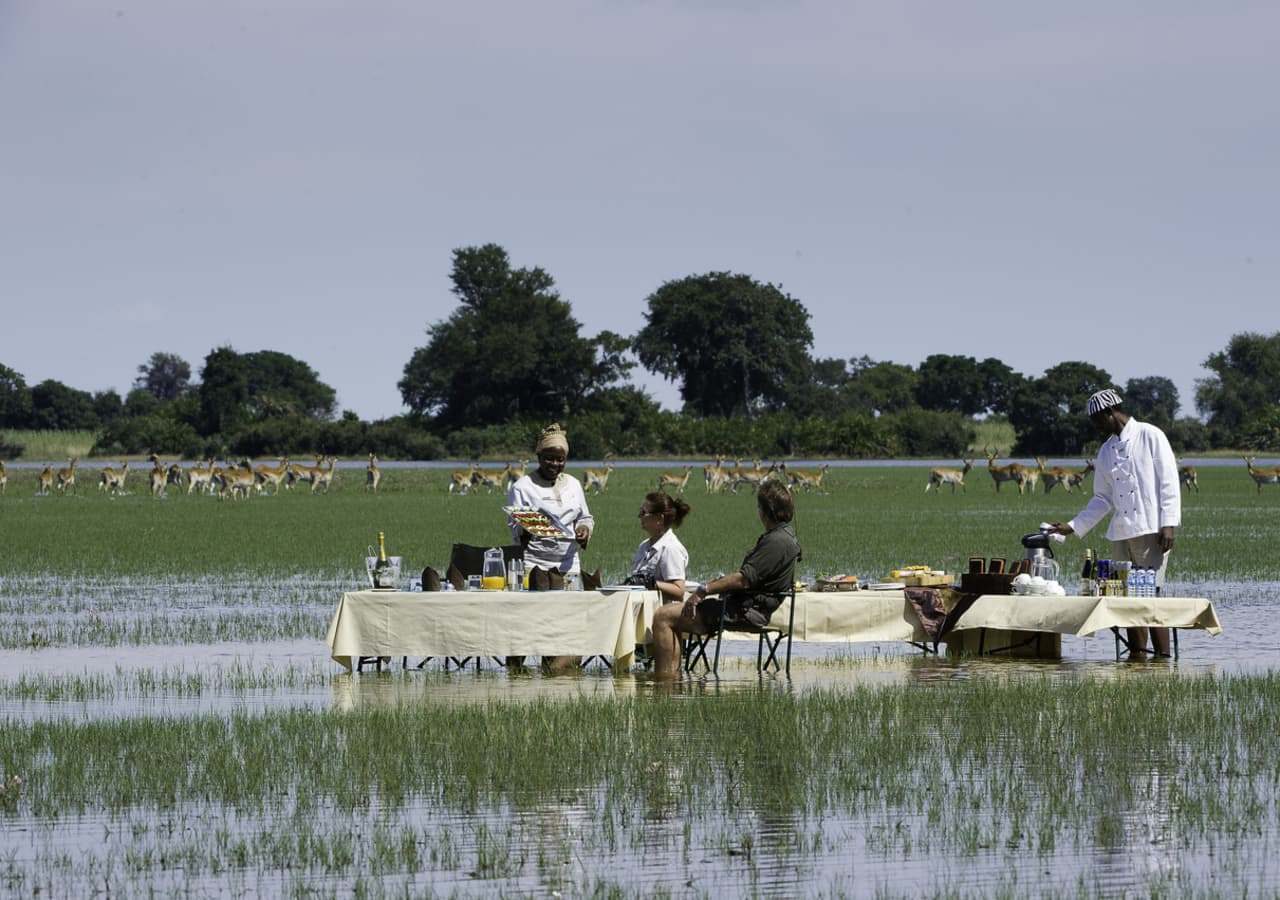
The following morning we further explored the 30 000 hectare private reserve in which Duba Plains Camp is situated. The area offers scenery which is a mixture of open grassland and marshy plains (depending on the time of year and varying water levels). We were particularly happy to see herds of the attractive lechwe antelope. We wished we could have caught up with the lions on their second attempt on the buffalo but it was time to move north to the area of the Delta known as the Jao concession.

Our camp here was called Kwetsani Camp where we had a couple of nights. Upon arrival at the airstrip we had a fantastic motor boat transfer through the massive networks of papyrus lined canals. We had no idea how our guide did not get lost in this maze! Kwetsani Camp has a beautiful setting in a heavily wooded area of palm, mangosteen and fig trees. The camp is raised on wooden walk ways and as you walk down these walkways (or indeed as you sit in front of your tent or in the main area) you can see plenty of wildlife including vervet monkeys, baboons, bush buck, impala, warthog, lechwe and elephant. During our stay we were lucky enough to have mating lions in the camp. Lions normally mate many times over the course of 2 or 3 days and for 2 nights straight we heard the roars of the lions. At one point they were so loud they woke us up! We managed to catch up with them in the morning and got some great photos. On our second night we were eating dinner and heard some splashing coming from the flood plains in front of the camp. We got our flash lights out and saw the male and female walking right past the camp. It was very exciting! During our stay at Kwetsani we had some very exciting game drives, our highlights being a female leopard right next to the vehicle and a newly born lion cub. On our last morning we were woken early by an elephant eating right in front our camp. Our morning activity that day was a mokoro ride. Mokoros are dugout canoes and it is these gliding through the tall grass in shallow canals that form the quintessential image of the Delta. As we silently glided along the water it made a change from the regular game drives and how wonderful it was to view the environment from a completely different viewpoint. We watched an elephant come to drink and witnessed it from ‘below' so to speak. It was a peaceful morning's activity for us where we particularly enjoyed the fantastic birdlife for which the Delta is famous. Greg's nemesis the Pell's Fishing Owl unfortunately evaded us once again!

The Jao concession as a whole consists of a number of habitats – deep permanent waterways to semi-flooded plains, floodplains, dry grassland and open savanna. Dotted around the floodplains are islands of riverine forest. Other camps in the concession are Jao Camp and Tubu Tree Camp, both of which offer excellent game viewing and guiding.

We sadly said goodbye to the fabulous staff at Kwetsani Camp and bordered yet another plane to the Kwedi concession of the Delta. We were extremely pleased to arrive at the superb Vumbura Plains Camp. A ‘premier' camp managed by Wilderness Safaris Vumbura Plains offers a very high level of luxury. We were seriously impressed by our very modern style room, complete with a huge shower, our own private plunge pool and outdoor ‘sala' area, a lounge, outdoor shower and the most comfortable bed we have ever slept in! Before our game drive that afternoon we experienced a phenomenal afternoon ‘tea' with very tasty mini hamburgers and a wonderful array of cakes.

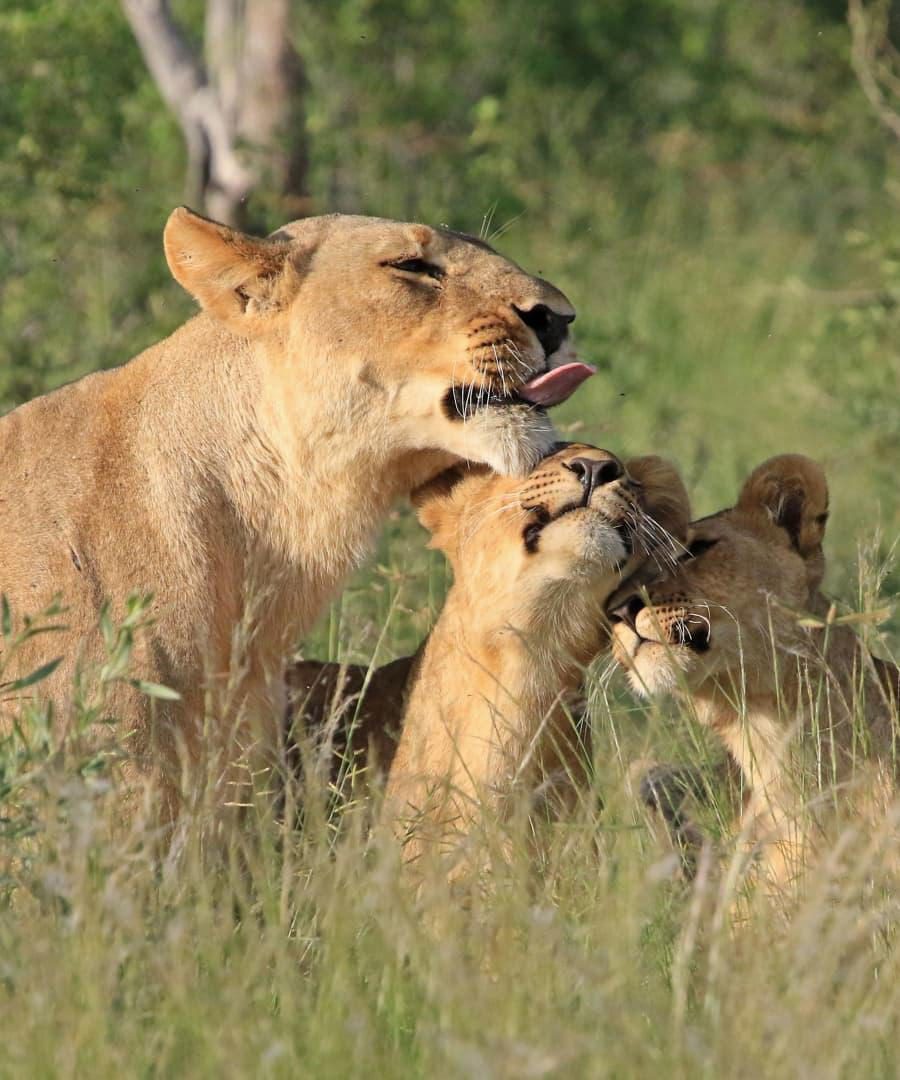
With our tummies suitably full we asked our driver Bam to take us to the male lions which had been spotted earlier in the day. On arrival the 3 brothers were sleeping which is normally how you encounter lions during day light hours. We laughed at the positions they were lying in – legs spread-eagled - and the funny noises they were making during their slumber. We had the vehicle to ourselves and we decided to sit put for a while and see if they decided to make a move. We were rewarded, not by a hunt but by the highly interesting interactions the brothers started to make between themselves. One moved over to the other, still half asleep and put his huge paws around his brother in what can only be described as a cuddling. He proceeded to lick him clean, just like a domestic cat. We were literally inches from this interaction and we were totally enthralled by animal behaviour we had never seen before. If they weren't huge male lions we would have called it ‘cute'!!

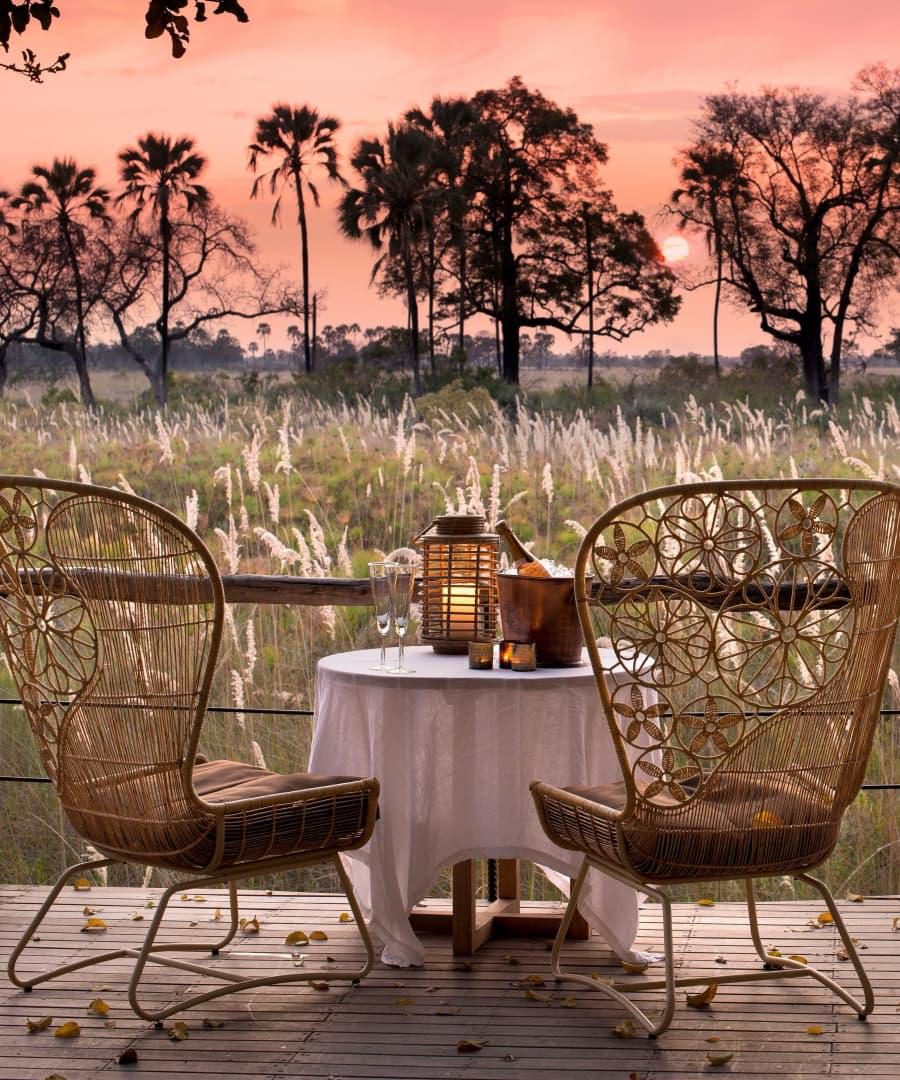
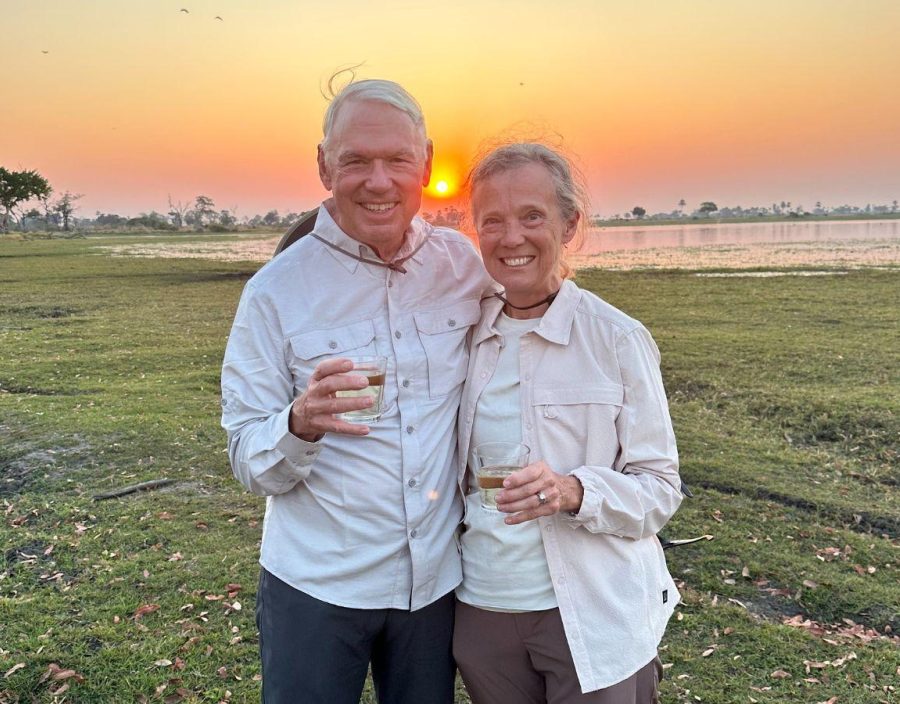
After wonderful ‘sundowers' of gin and tonic we returned to camp where staff had surprised us with a fantastic private meal set up on our private sala outside our room. There were candles and hurricane lamps everywhere and a bottle of champagne sat cooled and ready for us. We were then served an absolutely delicious three course meal and toasted our married life by candlelight and under a full moon. What a thoroughly unique and special experience never to be forgotten!

Our journey then took us to the north west of the Okavango Delta to the Linyanti area, host to seasonal zebra and elephant migrations and a favoured hunting ground for healthy numbers of predators. We were particularly interested in seeing the famous Savute channel which has been dry for 28 years and only this past year has began to flow again, completely changing the landscape and wildlife. The selling point for the area is its unrivalled remoteness and space. The bulk of the area is mopane woodland but along the Linyanti River exists a strip of riparian forest and floodplain.

We stayed two nights in Duma Tau Camp and also visited its sister camps Savute Camp and King's Pool. As we arrived in Duma Tau and had tea, we marvelled at a bull elephant in the camp trying to push down a tree directly on top of the camp's bar! Luckily there was a narrow miss but it was certainly an exciting viewing and we got some really up-close photos of this enormous creature. Then to add to the excitement someone shouted ‘wild dog!'. We turned and saw a wild dog run right in front of the camp, followed by a few others from the pack. Wild Dog are extremely endangered in Africa and we knew that we were about to be treated to a very special wildlife experience. We all hopped into our game drive vehicles and went looking for the pack. When we first encountered them the pack of 11 were having an afternoon snooze. Unlike lions though, wild dog hunt before the sun sets so our guides knew that with a bit of patience the dogs would soon go hunting. They were right and after a while the dogs came to life and split up in the search for their next meal. For around 2 hours we followed the pack as they darted back and forth, re-formed and split up and we saw herds of impala scatter as the dogs moved in. We missed the actual kill by minutes but soon came upon 3 dogs ripping apart a baby impala. The high pitched squeals of the dogs soon alerted the other dogs, who joined in the feast. It was a truly memorable game sighting for the two of us.

Our last night in Botswana provided yet another special memory. We were again treated to a private meal in the gazebo of our tent. Surrounded by candlelit and listening to the hippos just metres from us we wished that we did not have to leave this incredible country.

The whole experience for us in Botswana was truly wonderful. We will particularly remember the Botswanan guides and camp staff who were always not only helpful and knowledgeable but interesting and good fun. We were pleased to see that our overall hosts for the trip, Wilderness Safaris ensure that all staff are thoroughly trained and have further opportunities for development. Wilderness Safaris support many environmental studies and programmes to ensure the lasting protection of the country (and others in which they run their camps). The company also offer a wonderful programme throughout Southern Africa called ‘Children in the Wilderness'. Every year a number of Wilderness camps are closed to the public for a couple of weeks and the camps host rural children that live alongside the Parks and Reserves. During this time the children learn the importance of conservation. They undergo an environmental and life skills educational programme aimed at bridging the divide that exists between communities and wildlife. At the same time they make friends and have loads of fun. We really want to get further involved in this fabulous programme to ensure that future generations preserve the pristine and untouched environment that is Botswana. This way many more visitors can experience the incredible beauty of Botswana's national parks and its people. We are already planning our next trip.

Botswana is a year round destination but traditionally the ‘best' time of year for the Okavango Delta is dry season from June to October. This is peak season and if you are looking for good value do consider the fantastic green season months. If you would like to experience Botswana for yourselves please call either Sarah or Greg who will be happy to advise you on what your best options would be. There are a variety of camps on offer to suit various budgets.

Back to Top

Greg's Safari Holiday (2008)

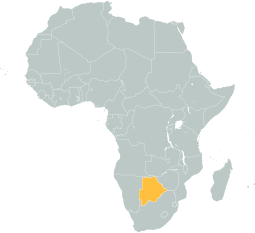
It was with these stories in my mind that I headed off on one of my visits to Botswana in March 2008. Situated in the centre of Southern Africa and more than 600 kilometres from the nearest ocean, Botswana is a landlocked country, with Namibia, South Africa, Zambia and Zimbabwe as its immediate neighbours.

Botswana tourism has a very progressive policy of low-volume and high-yield; meaning the government minimises the number of camps and visitors allowed. In doing so, the cost per person is higher than neighbouring regions, but this is easily outweighed by the privilege of experiencing the remoteness of this unique place and not having to share it with hordes of other tourists With the exception of the eastern part of Botswana, where most of the population live and where the summer rainfall is slightly higher, the majority of Botswana is made up of the Kalahari Desert. Yet within this dry, arid landscape in the north of Botswana sits the Okavango Delta. Known as the 'jewel of the Kalahari', it is a wonderful wetland within a desert, considered by many to be Africa's premier wildlife and wilderness sanctuary. Quite aside from the excellent, year-round wildlife viewing on offer, the beauty of this water wonderland alone is simply awe-inspiring.

The only way to easily access the Okavango Delta is to fly in by light aircraft and it was in Maun where my journey began. It wasn't long before we gained our first glimpse of the shimmering waterways, pans and lush grassy plains that mark the start of the Okavango. The feelings of excitement and anticipation were building throughout the journey and intensified with the first aerial sightings of elephant, giraffe and even hippos lounging in the shallows far down below. The 45 minute flight passed in an instant and as the plane started to descend, and there stretching out below us, was a dirt airstrip carved into the virgin African bushveld!

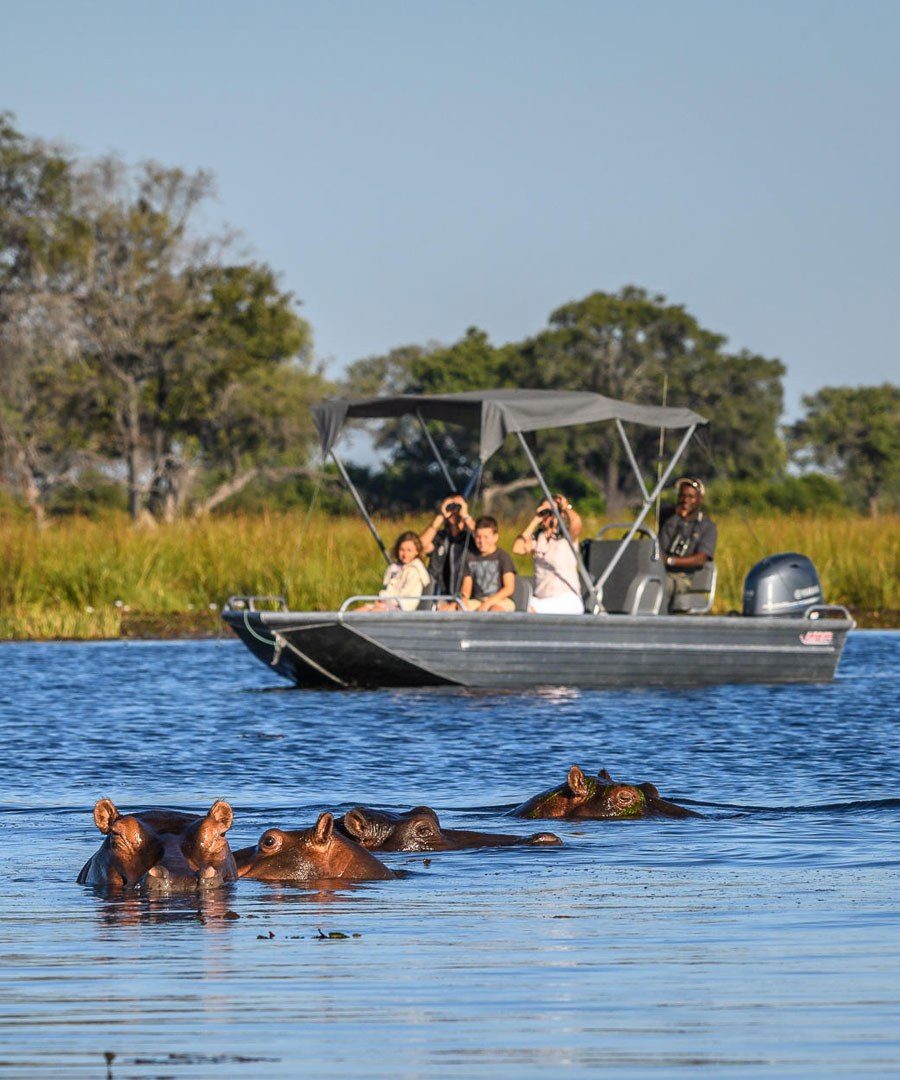
The camps in the Okavango Delta are divided up into what are known locally as wet and dry camps. Wet camps are located in areas of permanent water and offer mainly water-based activities including Mokoro trips, (traditional dugout canoes used by the indigenous people to navigate the narrow Delta channels), boating as well as guided walks on the small islands. The dry camps, as their name implies, are either far away from the permanent water sources or are seasonally flooded and operate more land-based activities 4x4 game vehicle game-viewing as well as walking. A number of camps are ideally positioned to offer both land and water-based activities.

The camps themselves vary from lodge to lodge but all are semi-permanent structures, to suit Botswana's low-impact environmental policies. Whilst accommodation is usually in Meru-styled tents set above the ground on stilts, erase all preconceived notions about camping from your mind. From super king-sized four poster beds, silk drapes and elaborately carved furnishings, your 'tent' lodgings are equipped with every conceivable luxury (including full en-suite facilities), yet designed in a way that is still in keeping with the natural surroundings and to leave as light a footprint as possible on the planet. All camps are small and intimate and this low-density policy is carried across the region meaning you will not be interrupted; rather left to enjoy some of the greatest wilderness areas on the planet in quiet relaxation.

For my trip I spent time at Xigera Camp (pronounced Keejera), a wet camp just outside the Moremi Game Reserve, before moving to a dry camp in the Northern Region of the Okavango, Duba Plains, then finally on to Savuti Camp, located at the Source of the Savute Channel. For most trips to northern Botswana we would recommend you spend some time at both a wet and dry camp and try to include a visit to both the Okavango Delta and the Savute/Linyanti Regions; these diverse habitats will offer you the greatest chance to see the full complement of animals inhabiting the area.

Xigera Camp is comprised of only 10 luxury tents, set deep in a riverine forest. It is built on stilts offering stunning views of the surrounding lagoon and floodplains. I saw an abundance of great game including red lechwe, lion, spotted hyena and leopard and had the most amazing experience of being charged by a young bull elephant while out on a boat. It was an awesome spectacle as he charged in and out of the water kicking up spray and tossing his head about. Made even better knowing that we were in very deep water and were perfectly safe!

From Xigera we flew to Duba Plains Camp which was made famous by Derek and Beverly Joubert's film, 'Relentless Enemies' about the interactions between the lions and buffalo. The camp itself is set on an extremely remote island in the northernmost reaches of the Delta and offers that amazing never-ending battle of survival between the lion prides and buffalo herds, as well as sights of elephant, tsessebe, wildebeest and red lechwe. The camp is very intimate with only six luxury safari tents all. Again the views from the main lodge are superb over the surrounding plains and one can easily get lost just staring into the distance.

I was fortunate enough to have a fantastic experience while at Duba on my second morning. Out on a game drive where we rounded a corner and drove into the middle of a herd of around 250 buffalo. They moved about the vehicle in a mass of black that seemed to stretch for miles, huge bulls and tiny calves with their mothers all seemingly moving together as one tide. A short wile later we picked up lion tracks! Following them off road for what seemed like ages we rounded a corner and there they were! 12 lions (2 lions, 4 lionesses and 6 cubs) gorging themselves on not one but two buffalo kills. The aggression as they jostled for position on the kill was intense and the atmosphere was electric!

For the last leg of my Bostwana trip, I headed north-east and on to Savuti Camp in the Linyanti concession, which lies between the Okavango Delta and the Chobe River. Secluded and uncrowded, this area of mopane woodland, riverine forests and floodplains provide a hugely diverse habitat that attracts a wealth of wildlife to this region. The Savuti Camp overlooks a water hole that is the only permanent source of water for miles and as a result offers excellent game viewing right from the Camp! We had a procession of bull elephants coming down to drink every night, greeting each other in a ghostly silence before moving down to drink and then disappearing back into the darkness.

All too soon my time in Botswana was up. A lifetime ambition to follow in the footsteps of my inspirational great, great-grandfather has been fulfilled, but in no way has my appetite and passion for this region been satisfied. Until my next trip, I will have to make do with my incredible memories and literally thousands of stunning digital images of this amazing country and its natural wildlife.

Back to Top

Customer Review

Holiday to Botswana during February 2011

Botswana Review

All I really know about Botswana is the camps I stayed in and the bush apart from a brief visit to Maun which can probably best be described as a "frontier" town but it seemed to me to be clean and orderly

Rated... 5stars

Signed:

Bill Passmore

Botswana Factfile

Timezone:
GMT + 2 hours
Language:
Setswana, English, local languages
Currency:
Pula, US Dollar
Best time:
Year round destination
Flights:
11 hours from Europe
Visas:
Not needed for many Europeans & Americans, call for info
Weather:
Click here for weather information