
 +1 347-708-1755


Sight gets most of the credit on safari. The first elephant, the sweep of grassland at sunrise, a leopard draped over a branch. But talk to anyone who has spent time in the African bush, and they'll tell you it's often a smell that pulls them straight back, long after the trip has ended. We asked our most seasoned safari travellers and guides which smells stay with them, and grouped their answers by where you're most likely to catch them.
Around Camp, Morning and Evening
Camp life has its own rhythm, and its own particular smells. The sharp, slightly medicinal scent of mosquito repellent, applied without fail as the light starts to fade. Paraffin lamps flickering along the paths between tents, their warm kerosene smell mixing with the cool evening air. A gin and tonic with a twist of lemon, poured as the sun drops below the horizon, has become something of a ritual sundowner smell in its own right. And in the morning, camp begins again with the smell of fresh coffee drifting from the mess tent before the first game drive of the day.
Then there's the smell that clings longest: woodsmoke. A campfire crackling after dinner works its way into your jumper, your hair, your bags, and stays there well past the flight home. Add the smell of sunblock reapplied through the heat of the day, and a plate of biltong passed around at the bar, and you have the smell of camp itself, quite apart from the bush beyond it.

Out on a Game Drive
Step away from camp and the smells shift entirely. Diesel from the Land Cruiser, warmed by the engine and the morning sun, is oddly one of the most evocative smells for returning safari-goers, tied as it is to the anticipation of what the day might bring. Dry grass gives off a warm, papery smell underfoot, especially in the dry season, while dust kicked up along a track has its own particular smell of heat and earth. Wild sage, brushed against as the vehicle passes, releases a sharp, herbal note that lingers in the air. And the potato bush, true to its name, gives off a smell disconcertingly close to a baked potato, usually met with surprise the first time you notice it.

Signs of the Bush's Wild Residents
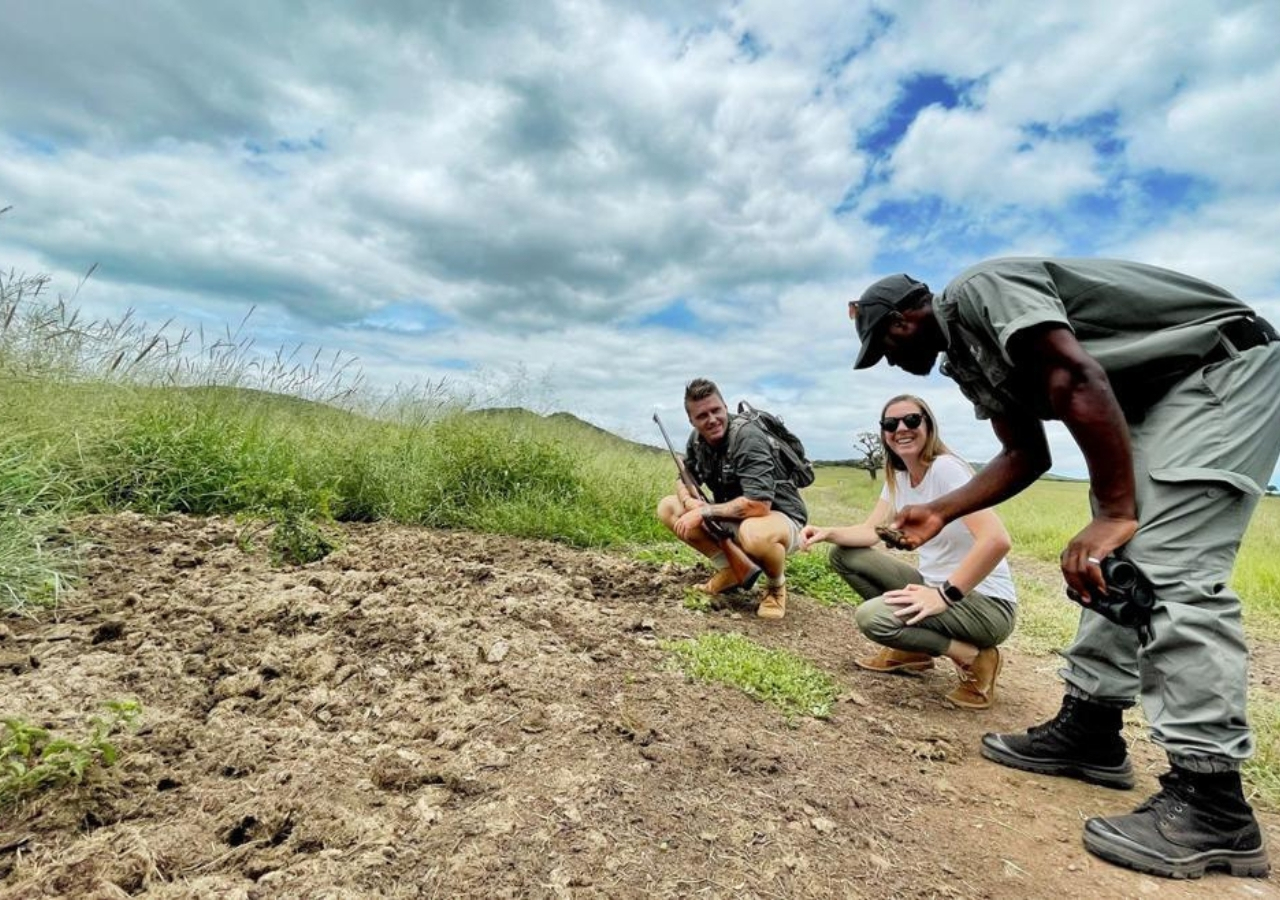
Some of the bush's most distinctive smells come directly from the animals that live there. Fresh animal dung, whatever the source, is one of the most immediate markers that you're close to wildlife. A midden takes this further: a communal latrine site where impala gather to deposit their dung together, often used by rhino and wildebeest too. Guides read middens as a kind of noticeboard, and the smell, once you know what it is, becomes strangely memorable rather than unpleasant.
When the Rains Come
Few smells are as universally loved on safari as rain arriving after a long dry spell. The scent released as the first drops hit parched earth, known more widely as petrichor, has a particular intensity in the African bush that people describe for years afterwards. Morning dew brings a gentler, cooler version of the same freshness, while a spell of humidity settling over wet vegetation gives the whole landscape a green, growing smell that's rare in the dry months. Muddy rivers after rain carry their own earthy, mineral scent, and even veld fires, though less welcome, leave behind the sharp smell of burnt grass that becomes, in its own way, part of the bush's story through the seasons.

At Mahlatini, all our itineraries are individually tailored to suit your personal travel requirements and budget, so you get the best possible experience and value from your time away. Contact our specialists today to start planning your bespoke safari itinerary.


