The Best Festivals of India, Sri Lanka, Bhutan and Nepal
Experiences
The Best Festivals of India, Sri Lanka, Bhutan and Nepal
From Diwali in Jaipur to Bhutan's masked Tshechu festivals, our experts guide you through the best festivals to build a trip around in India, Sri Lanka, Bhutan and Nepal.
Timing a trip around a festival takes expert planning and can be an incredibly rewarding experience. We've picked the festivals across Asia that reward the effort of building an itinerary around them, region by region. Most follow the lunar calendar, so exact dates shift every year: treat what's below as the season to aim for, and check specifics with your Travel Expert before booking flights.
India
India doesn't have a festival season so much as a festival calendar that never really stops, and nearly every one of them is celebrated somewhere across the country in some form. We've kept this list to the five we'd most readily build a trip around.
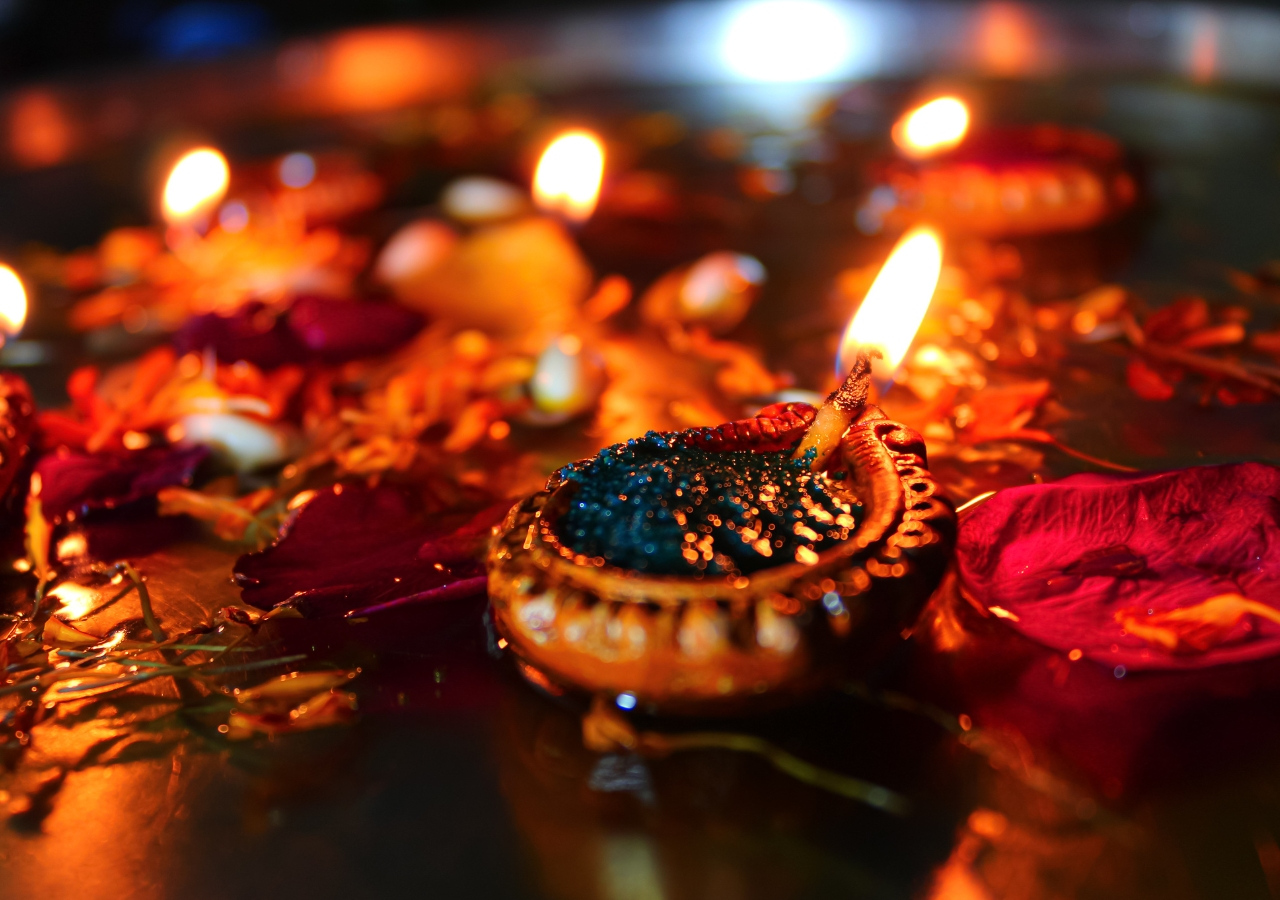
Lights are placed across India during Diwali
Diwali
When: October or November
Diwali is India's biggest festival by any measure, and it's celebrated everywhere, but not identically everywhere. In Jaipur, the celebrations are legendary... the entire Pink City is draped in lights for weeks either side of the festival, and the bazaars around Johari Bazaar are worth a visit for the illuminations alone. In Varanasi, the Ganges is alight with thousands of floating lamps that drift down the river past the ghats on the night itself. And in Amritsar, Diwali coincides with Bandi Chhor Divas, the Sikh festival marking Guru Hargobind's release from imprisonment, which makes the celebration at the Golden Temple twice as grand.
We suggest Jaipur as the base for most clients: it has the infrastructure and the atmosphere to do the festival justice, and combines naturally with the rest of a Golden Triangle trip.
Two practical notes worth flagging early. First, book three to four months ahead if you can: Diwali falls during a peak national holiday week, and India's best heritage suites and luxury transport sell out well in advance. Second, if you're invited to a private hotel puja or celebration during your stay, it's customary to wear white or bright festive colours rather than anything dark.
Holi's colour and chaos come out well in photographs, which is part of why it's become so well known abroad, though the version most visitors picture is only one way of celebrating it. There are two we'd point clients toward. The first is aboard the Maharajas' Express, which times its route to stop in Jaipur and Udaipur during the festival, arranging private Holi events at heritage palaces along the way, with organic gulal, folk dancers, dhol drummers, and a festive spread of gujiya and thandai served as the train rolls through Rajasthan.
The second is the City Palace in Udaipur, hosted by the Mewar ruling family and one of India's most prestigious Holi events. It begins the night before with Holika Dahan, the sacred bonfire ritual, marked by a royal procession of decorated horses and a royal band through the palace grounds. The following day brings private cocktail receptions and colour play with organic gulal, an alternative take on the festival than the street version, without losing any of its spirit.
Durga Puja
When: September or October
Durga Puja is one of Bengal's most important festivals, and Kolkata is where it's celebrated on the grandest scale anywhere in the country. Elaborate, artist-built pandals go up on almost every street corner, each one competing to outdo the last, and the city's idol makers work through the preceding months in Kumartuli, the old potters' quarter, to sculpt the goddess out of clay for the festival. On the final day, the idols are carried in procession to the Hooghly River for immersion, a fittingly dramatic close to five days of festivities.
Onam
When: August or September
Kerala's harvest festival is one that surprisingly few first-time visitors to India know about, tucked away in the south while Diwali and Holi get most of the attention further north. It is carried out over ten days, built around the Onam Sadhya, a magnificent feast of dozens of small dishes served on a banana leaf, and the Vallam Kali snake boat races, where crews of over a hundred paddlers race elaborately decorated long boats down the backwaters to a thunderous drumbeat. Elaborate flower carpets, known as pookalam, appear outside homes throughout the festival.
Ganesh Chaturthi
When: August or September
Mumbai transforms for ten days around Ganesh Chaturthi. Enormous, elaborately decorated idols of the elephant-headed god are installed in homes, streets and purpose-built pandals across the city, before being carried down to the sea in procession for immersion on the final day. One of our Travel Experts was in Mumbai for the festival recently and described the scale of the final immersion processions as fabulously chaotic. Imagine drums beating crowds toward the coast in numbers that are genuinely hard to picture until you're standing in them.
Sri Lanka
Sri Lanka’s cultural calendar is dictated by the Poya (full moon) of each month, leading to beautiful, light-filled gatherings.
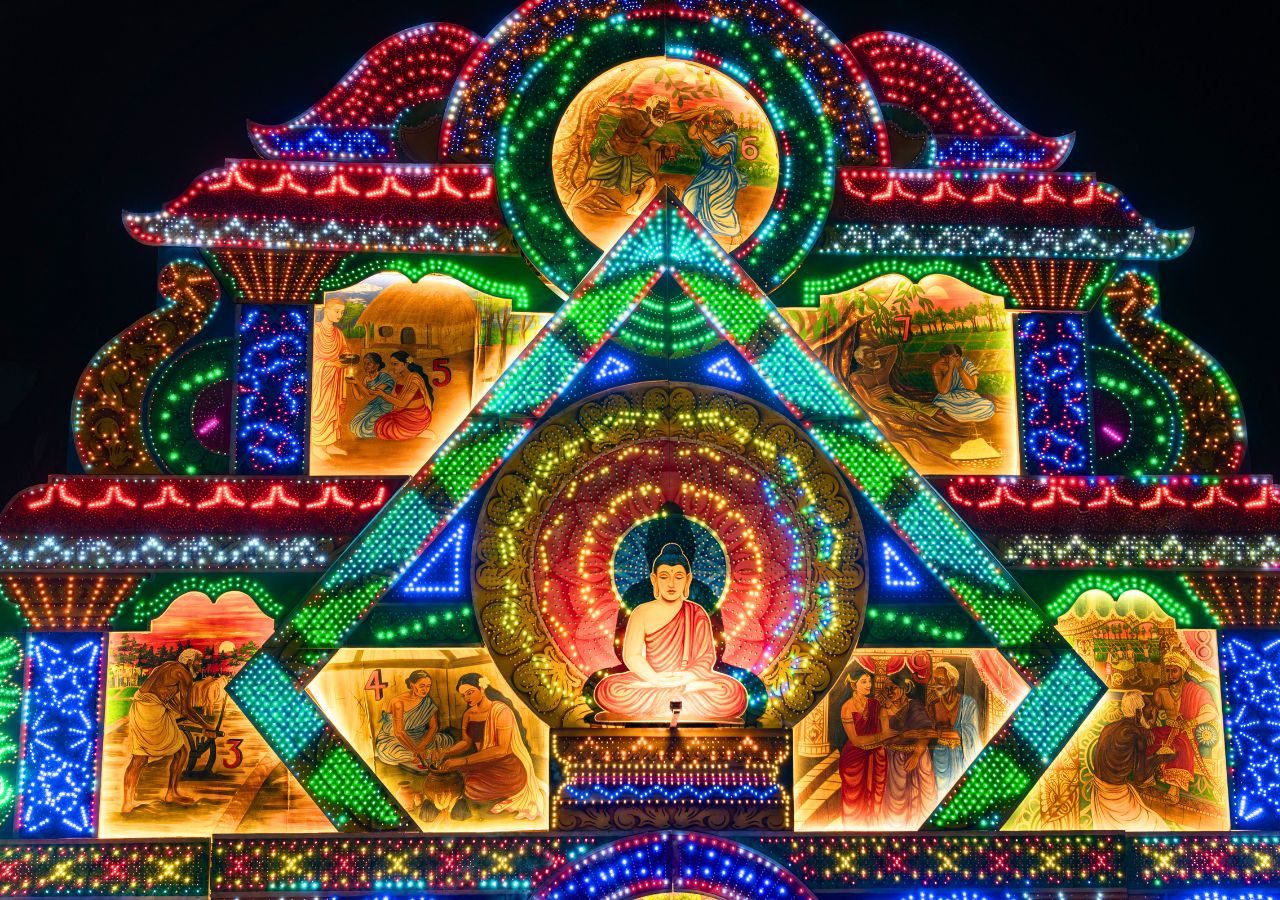
Illuminated Buddhist festival display
Vesak
When: May, on the full moon
Vesak marks the birth, enlightenment and passing of the Buddha, all on the same night, and it transforms Sri Lanka more completely than almost any other festival on this list. Homes and temples across the island are strung with handmade paper lanterns, known as Vesak koodu, and major junctions are given over to enormous illuminated pandols, or thoranas, that narrate scenes from the Buddha's past lives in light. Temples run alms-giving stalls called dansal, offering free food to anyone passing, a small but lovely tradition. Colombo puts on the biggest show, but Kandy's version is quieter and more spiritual, with lanterns reflected in Kandy Lake and ceremonies at the Temple of the Tooth.
Bhutan
Bhutan's festival calendar could fill a list of its own, and honestly we could have picked half a dozen more. We've focused on the two most significant, plus a smaller, wilder one that gives a nice wildlife angle if you're already drawn to Bhutan for that reason.
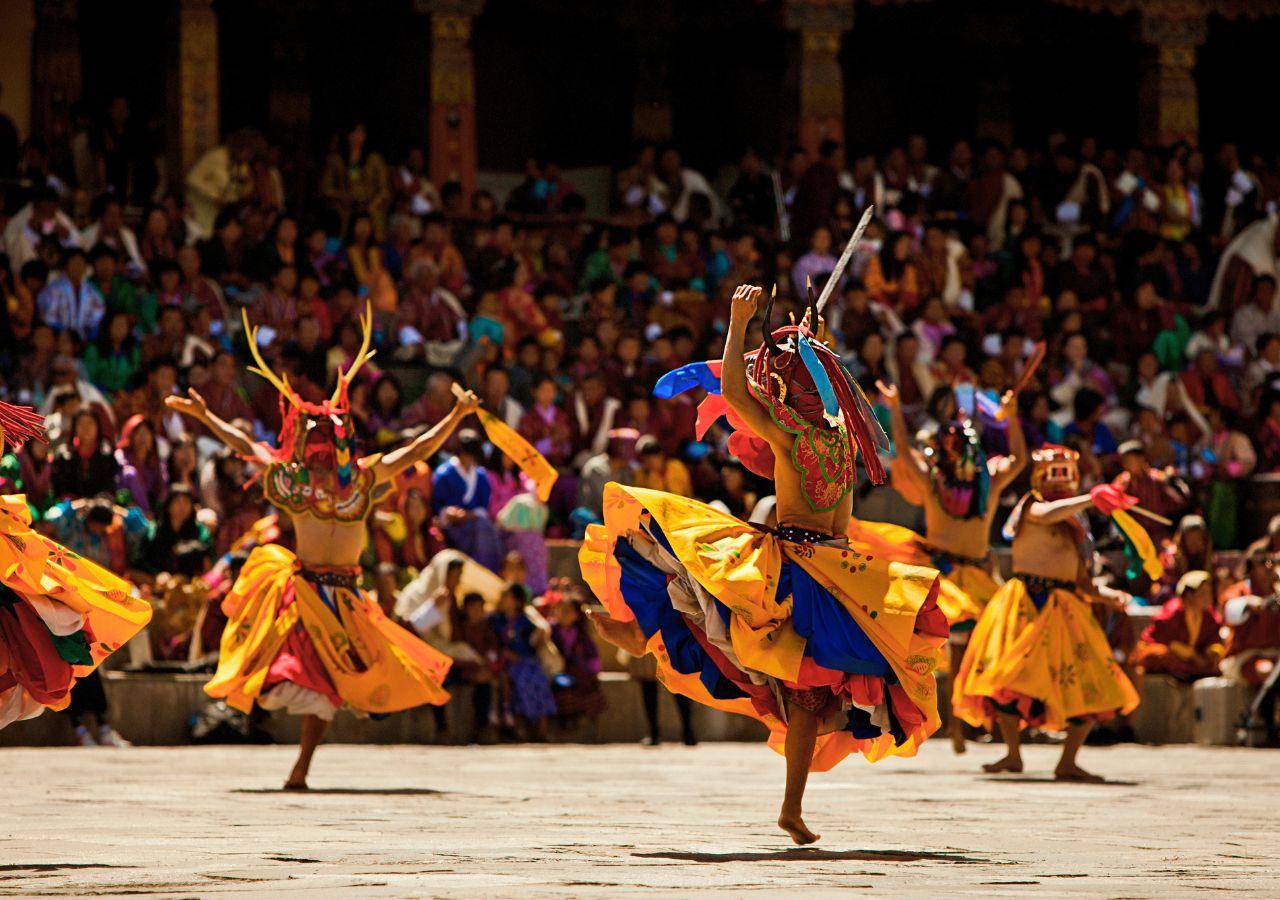
Masked dancers at Thimphu Tshechu
Thimphu Tshechu
When: September or October
The largest and most important Tshechu in the country, held every autumn in the courtyard of Tashichho Dzong in Thimphu. Monks and laymen in elaborate costume perform sacred masked dances, and the festival closes with the unfurling of a giant thongdrol, a huge appliquéd religious tapestry believed to cleanse the sins of anyone who sees it.
Punakha Drubchen and Tshechu
When: February or March
The Drubchen comes first, a dramatic re-enactment of Bhutan's seventeenth-century victory over invading Tibetan forces, with local militiamen dressed in full battle costume performing the old battle scenes on the grounds of Punakha Dzong. It's followed a few days later by the Tshechu itself, with masked dances and folk songs performed by local women, a softer counterpoint to the Drubchen's theatre.
Black-Necked Crane Festival
When: November
Every November, the remote Phobjikha Valley celebrates the arrival of the endangered black-necked cranes, which migrate down from the Tibetan Plateau to winter here in the hundreds. It's a smaller, more local affair than the Tshechus, built around cultural performances and mask dances held on the grounds of Gangtey Monastery, and it doubles as a genuinely good wildlife encounter if that's part of what draws you to Bhutan in the first place.
Nepal
Nepal's festival calendar runs on both the Hindu and Buddhist calendars, which gives it a real range: family harvest festivals, Buddhist New Year, and some of the most elaborate chariot processions anywhere in the region.
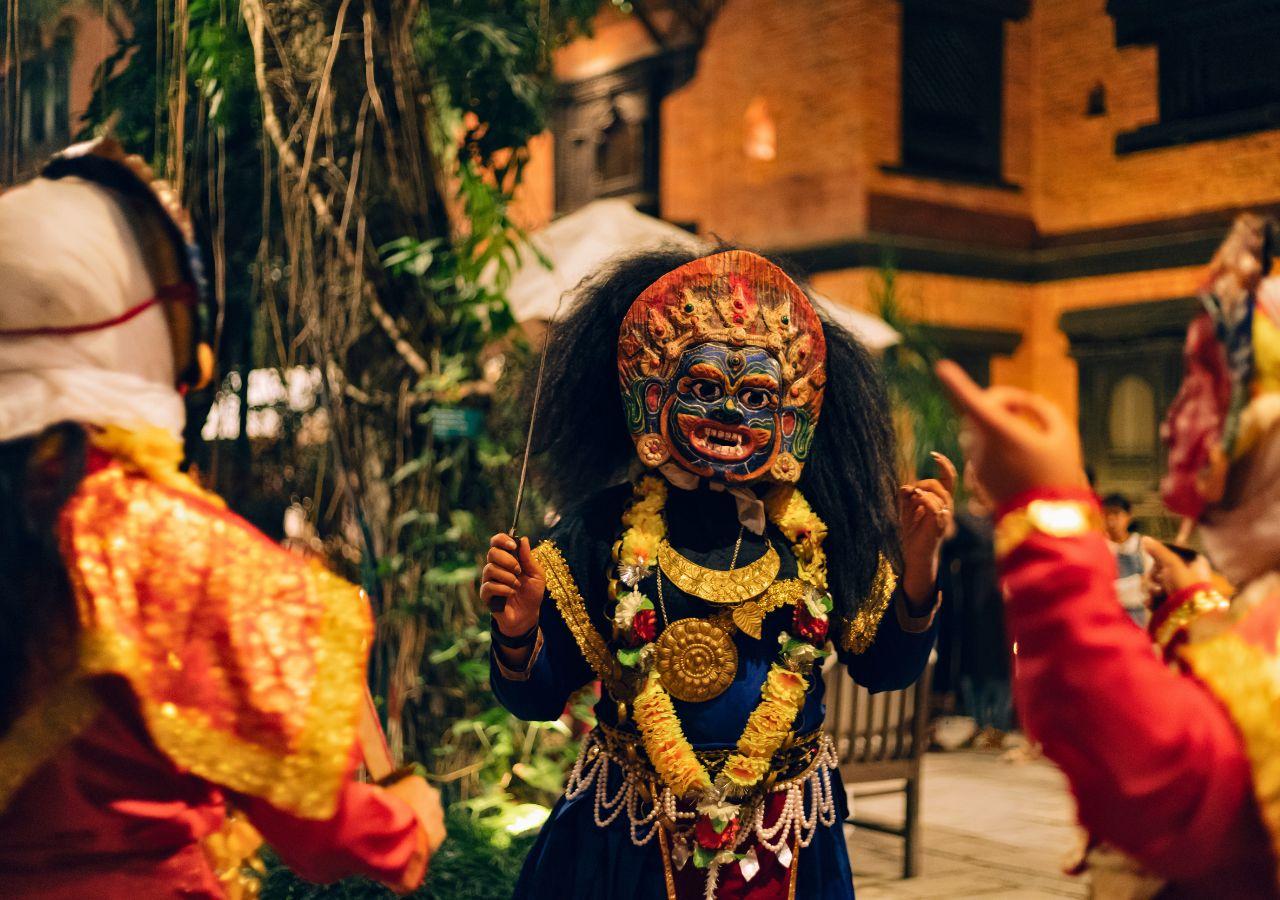
Indra Jatra festival in Nepal
Dashain
When: September or October
Dashain is Nepal's biggest festival by some distance, a fifteen-day Hindu celebration related to the same mythology behind India's Durga Puja: the goddess Durga's victory over the demon Mahishasura. Families reunite from across the country and abroad, elders bless the young with tika, a mark of rice, yoghurt and vermilion on the forehead, and jamara, sprigs of barley grown especially for the occasion. Giant bamboo swings appear in villages, and kites fill the sky over Kathmandu for the duration.
Losar
When: February or March
Losar is the Tibetan Buddhist New Year, celebrated by Nepal's Sherpa, Tamang and Tibetan communities, particularly around the Everest region, Mustang, and Kathmandu's great stupas at Boudhanath and Swayambhunath. Monasteries hold ritual dances and prayers, and families gather for a special soup called guthuk, with small tokens hidden inside each dumpling to playfully reveal something about the year ahead.
Rato Machhindranath Jatra
When: April or May, timed to the lunar calendar
Nepal's longest-running chariot festival, and one of the country's oldest continuous traditions, honouring Rato Machhindranath as the bringer of rain and prosperity. In Patan, a towering chariot, built from scratch each year and standing several storeys tall, is hauled through the city's narrow streets by hand over a period of weeks, drawing enormous crowds at every stage. It's celebrated to commemorate the city being saved from a legendary drought. The whole event has been running for well over a thousand years, and is quite something to see.
Indra Jatra
When: September
If we had to pick one Nepal festival to build a trip around for the photographs alone, it's this one. Held over eight days in Kathmandu's Durbar Square, Indra Jatra honours Indra, the god of rain, alongside the Kumari, Nepal's living goddess, a young girl believed to be the earthly incarnation of the goddess Taleju. Her chariot is pulled through the old city's streets in a procession that draws huge crowds, flanked by two smaller chariots carrying representations of Ganesh and Bhairava. Masked Lakhey dancers perform through the streets most evenings to the sound of drums, and the whole of Durbar Square is lit with oil wicks after dark.
Couples and families wanting festival atmosphere paired easily with a beach extension
Start Planning Your Trip to South Asia
A festival can create the vibe for an entire trip, but it needs to be planned well. Accommodation books out early in the towns and cities involved, and a good guide makes the difference between watching from the edge of a crowd and actually understanding what you're seeing. It's the kind of detail our Travel Experts spend a lot of time getting right, work that's helped earn us a place among Condé Nast Traveller's Top Travel Specialists.
It depends on what you want from it. Diwali and Holi are the most iconic and easiest to build a first trip around, while Durga Puja in Kolkata or Onam in Kerala offer a more distinctive experience for repeat visitors.
When is the best time to see Vesak in Sri Lanka?
Vesak falls in May, over the full moon.
Which Bhutan festival is best for a first visit?
Thimphu Tshechu is the largest and easiest to plan around, held every autumn in the capital. The Punakha Drubchen, held in spring, is more theatrical and slightly less visited.
What's the most photogenic festival in Nepal?
Indra Jatra in Kathmandu, without much competition: the Kumari's chariot procession, masked Lakhey dances and oil-lit Durbar Square make for one of the most visually striking festivals anywhere in the region.

 +1 347-708-1755