+1 347-708-1755


World Rhino Day falls on 22 September each year, a moment to celebrate the five rhino species that share our planet and to consider what it will take for each of them to thrive in the wild. In Kenya, there is real cause for hope. Black rhino numbers have climbed from fewer than 400 in 1989 to more than 1,000 today, and the challenge now is finding them room to grow.
For travellers, one of the most meaningful ways to support rhino conservation is to choose a travel company, and places to stay, that give back directly. Mahlatini Luxury Travel has been a charity partner of Save the Rhino International since 2013, and over thirteen years our clients' journeys have raised £34,713.05 (more than $46,600) for rhino conservation. This World Rhino Day, as Save the Rhino launches its Room to Roam appeal, we look at Kenya's rhino recovery and how your journey can help it continue.
How Kenya's Black Rhinos Recovered
In the 1970s, around 20,000 black rhinos lived in Kenya. By 1989, fewer than 400 remained, lost to a surge in armed commercial poaching for their horns and the steady erosion of their habitat.
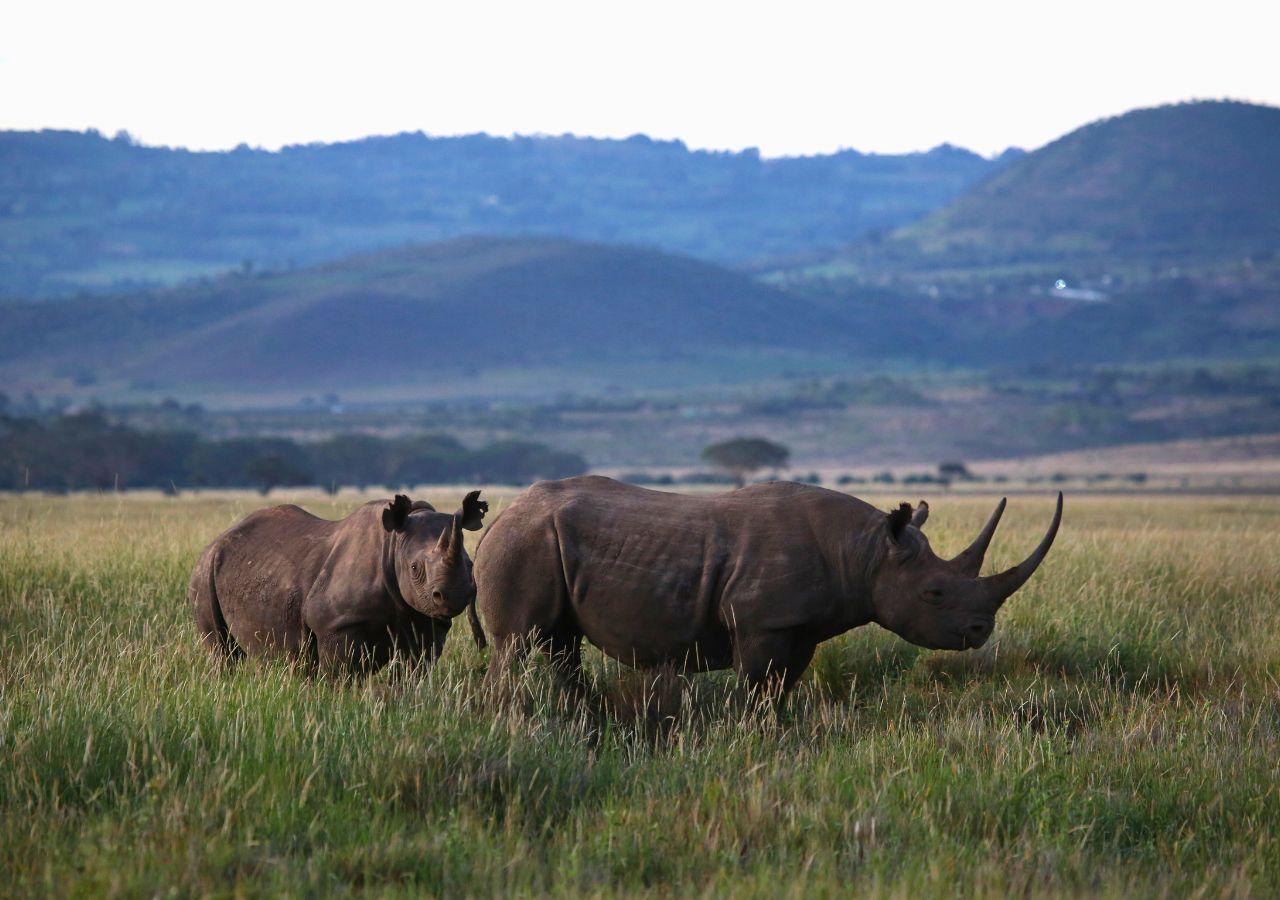
What followed is one of conservation's great success stories. Conservationists gathered the surviving rhinos into smaller, heavily protected sanctuaries, where intensive anti-poaching work and careful breeding management could give each population the best possible chance. National growth targets and strong wildlife crime laws gave that work a lasting foundation, while co-operation across the region helped it hold. Kenya is now home to around 80% of the world's eastern black rhinos, according to Save the Rhino International.
When Success Needs Space
Recovery has brought its own challenge. Many of the sanctuaries that saved Kenya's rhinos are now reaching their limits. As populations grow, pressure on food and water increases, and young rhinos find fewer places to claim territories of their own. It reflects a wider pattern across the rhino's range: as people occupy more land and a changing climate brings more extreme droughts and floods, rhinos need larger, better-connected safe spaces than ever before.
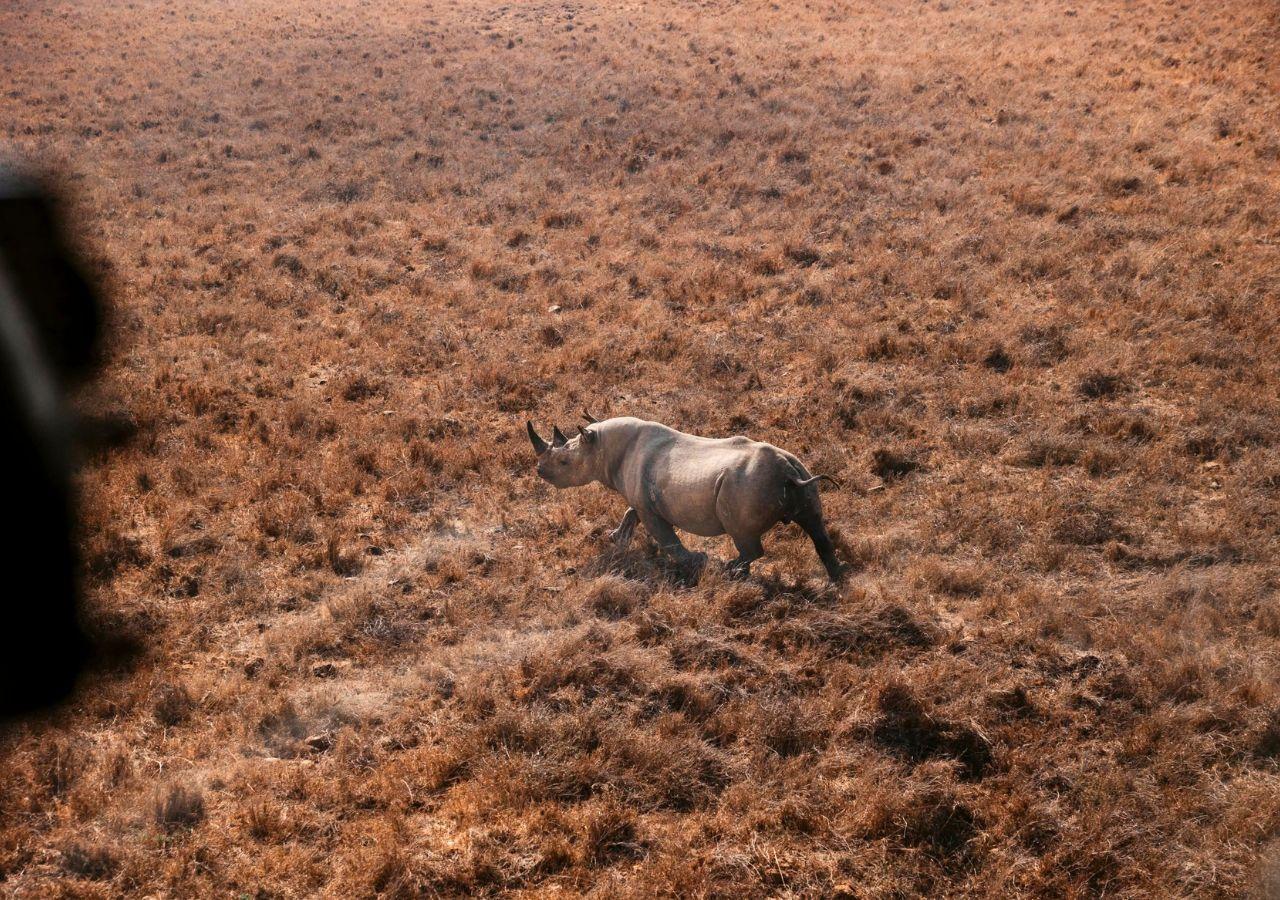
Save the Rhino International's Room to Roam appeal is making space for black rhinos in Kenya by helping fund the Kenya Rhino Range Expansion project. Working alongside the Kenya Wildlife Service and local conservancies, the project is identifying and preparing new landscapes across Central Kenya where rhinos can safely establish populations, as Kenya works towards its goal of a population of 2,000 rhinos by 2037. On the ground, that means restoring habitat and water sources, and strengthening security and fencing. Just as importantly, it means supporting the people who will monitor and protect these landscapes for years to come.
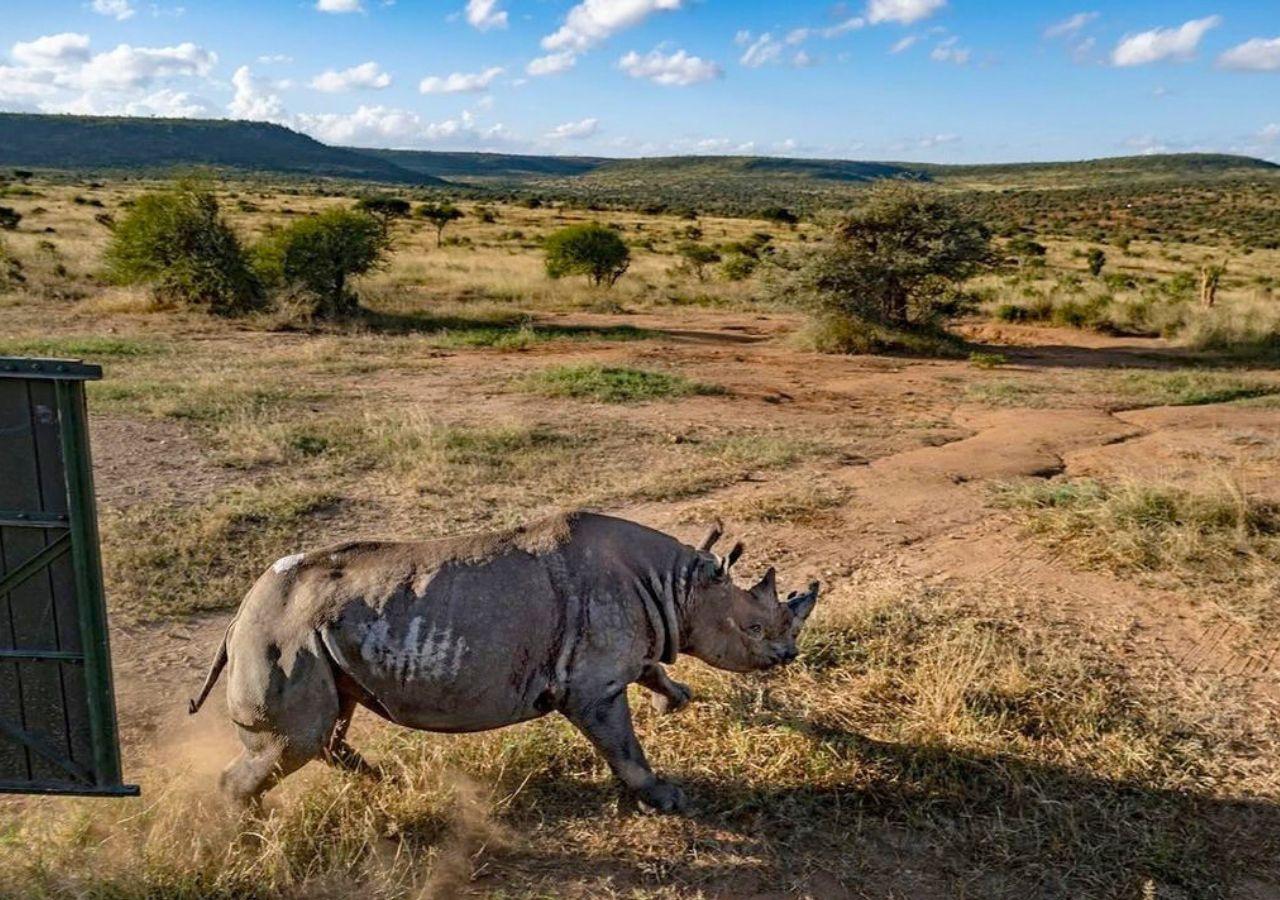
As each new site is ready, rhinos will be carefully released into places where their ancestors once roamed. It is the next chapter of Kenya's rhino recovery, one that looks beyond the rhinos here today to the generations still to come.
You can help too, whether or not you are planning a journey. Between 22 and 29 September, every donation to the Room to Roam appeal will be matched pound for pound, doubling its support.
Where Can You See Rhinos in Kenya?
Our team has seen this next chapter first-hand at Loisaba and Segera, where black rhinos have returned in the past two years. These are the conservancies we recommend for travellers who want to see rhinos and understand the work that protects them.
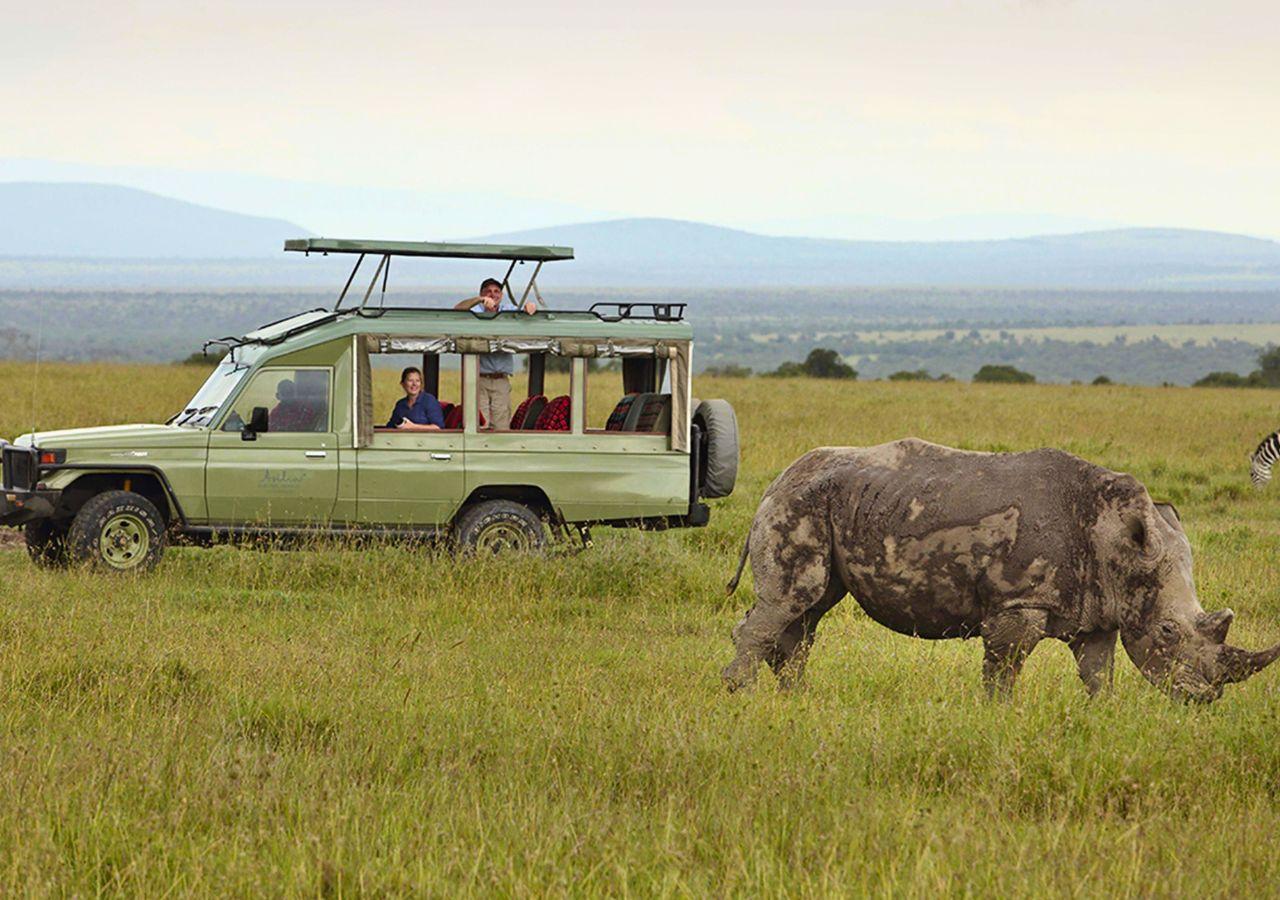
Loisaba Conservancy, Laikipia
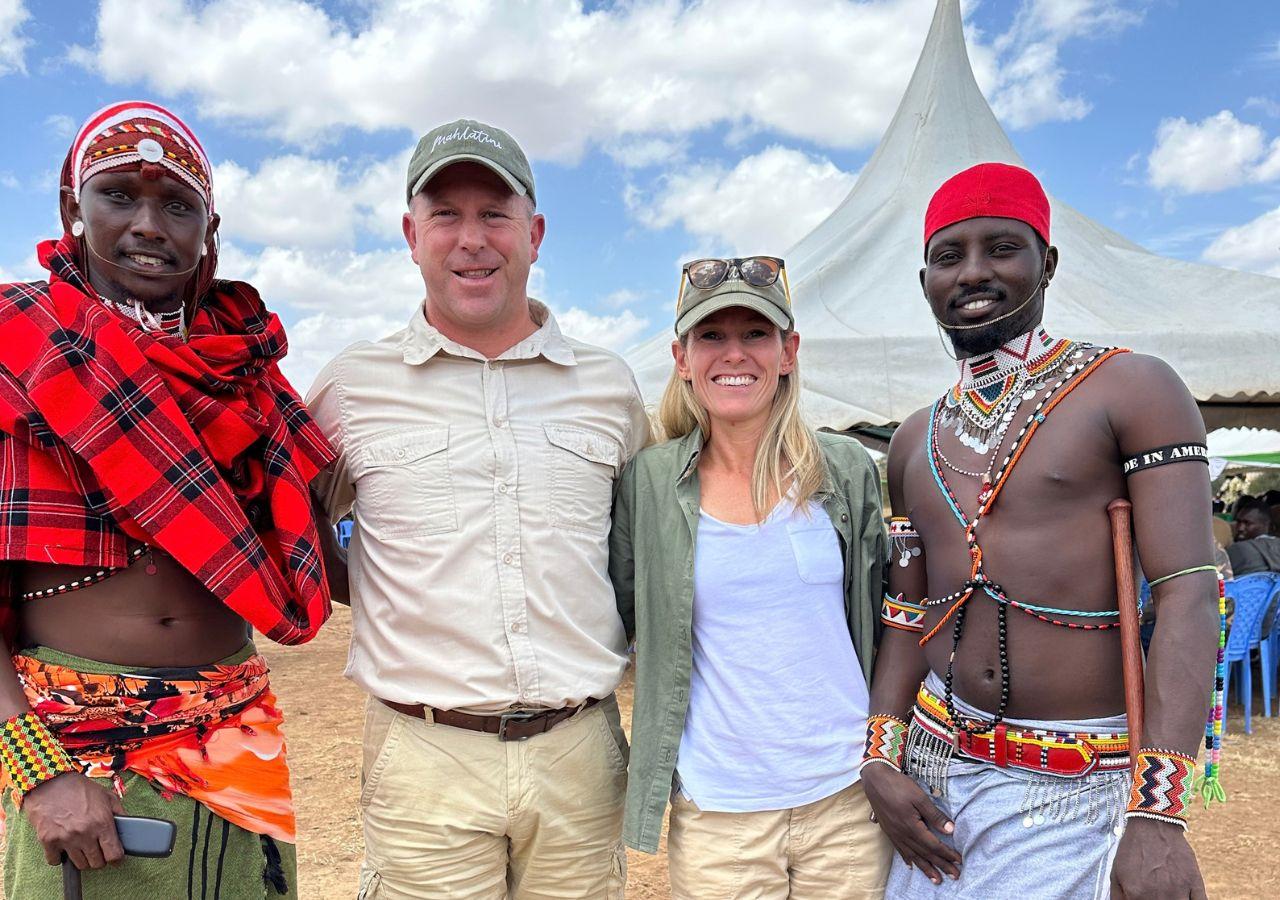
In February 2024, 21 eastern black rhinos came home to Loisaba Conservancy, returning to its landscape after an absence of more than 50 years. They now range across a 45,000-acre sanctuary within their 58,000-acre landscape, watched over day and night by rangers working alongside canine units, and six calves have been born since they arrived. Greg Fox, our Co-Founder & Director and a Travel + Leisure A-List Travel Advisor for 2026, was at Loisaba for the rhinos' homecoming on 13 February 2024, alongside Sarah Fox, our Product Advisor.