+1 347-708-1755


From Botswana's wild dogs to India's Bengal tigers, we've pulled together a closer look at the rarest sightings across our Indian Subcontinent destinations: India, Sri Lanka, Nepal and Bhutan.
Unlike an African savannah, where the terrain works in your favour, much of Asia's rarest wildlife lives in dense forest, high mountain scree or restricted single-country ranges, which is exactly what makes a sighting worth the effort. Here's where our travel experts would send you, and why.
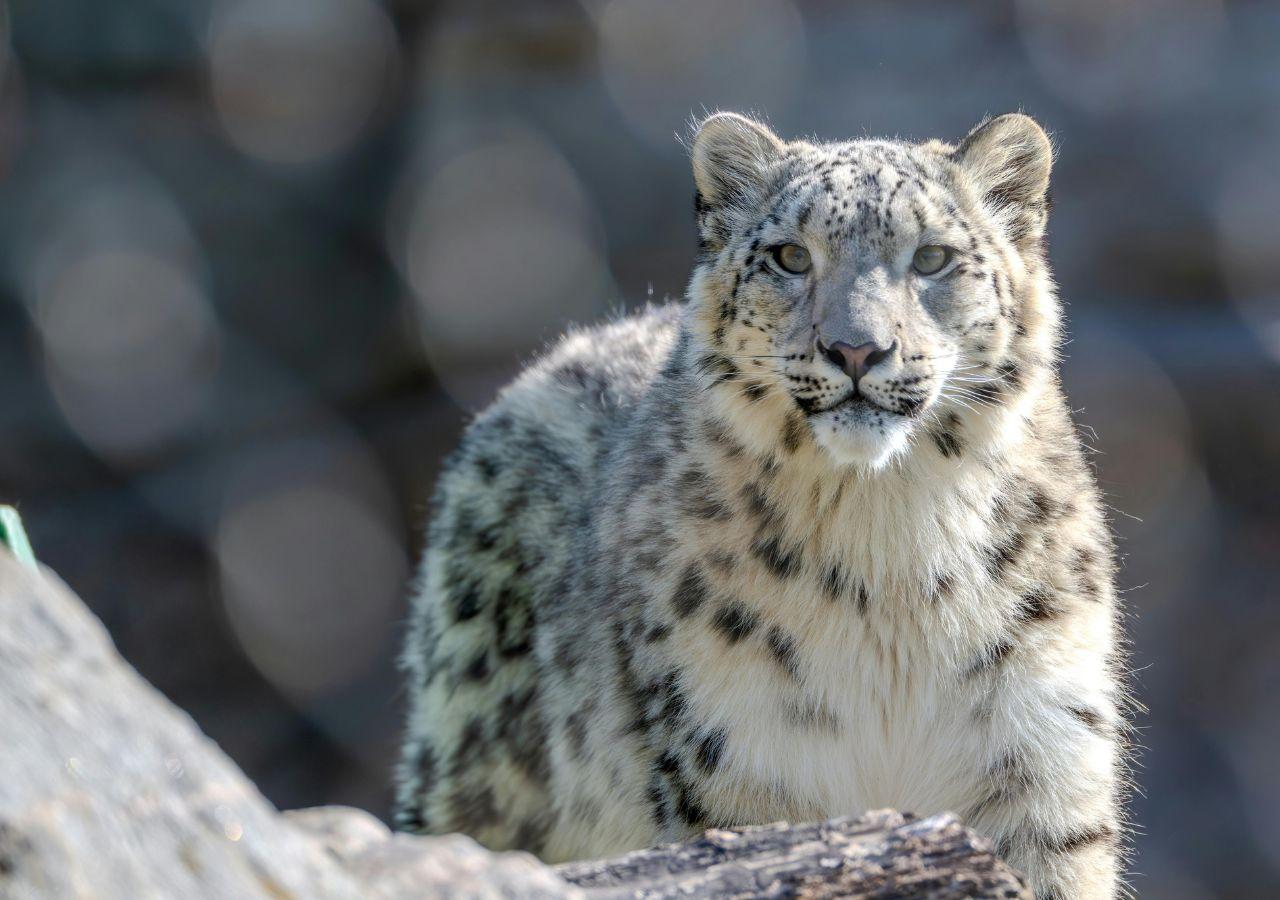
Snow Leopard | India, Nepal & Bhutan | Vulnerable
Why is it rare?
Fewer than 8,000 remain across the whole of Asia's mountain ranges, and their solitary, high-altitude habits mean even researchers who've spent years in the field rarely see one directly. Habitat fragmentation and conflict with livestock herders are the main pressures on numbers.
Where to find it?
Snow leopards range across the high Himalaya in all three countries, but Ladakh, in India's far north, is where we'd recommend going. It's widely considered the single best place on Earth to search for the species, thanks to the open, treeless terrain of valleys like the Lungmar. Winter is the season that matters here: from December to March, snow leopards follow their prey, mostly blue sheep, down to lower altitudes, which brings them within range of a scope for the first time in months. It's a proper expedition rather than a game drive, so expect early starts, high altitude and days spent scanning ridgelines with an expert tracking team, but it's also one of the most rewarding wildlife pursuits we offer.
Suggested Itinerary
In search of snow leopards, based around the Lungmar Remote Camp and Grand Dragon Hotel in Leh.
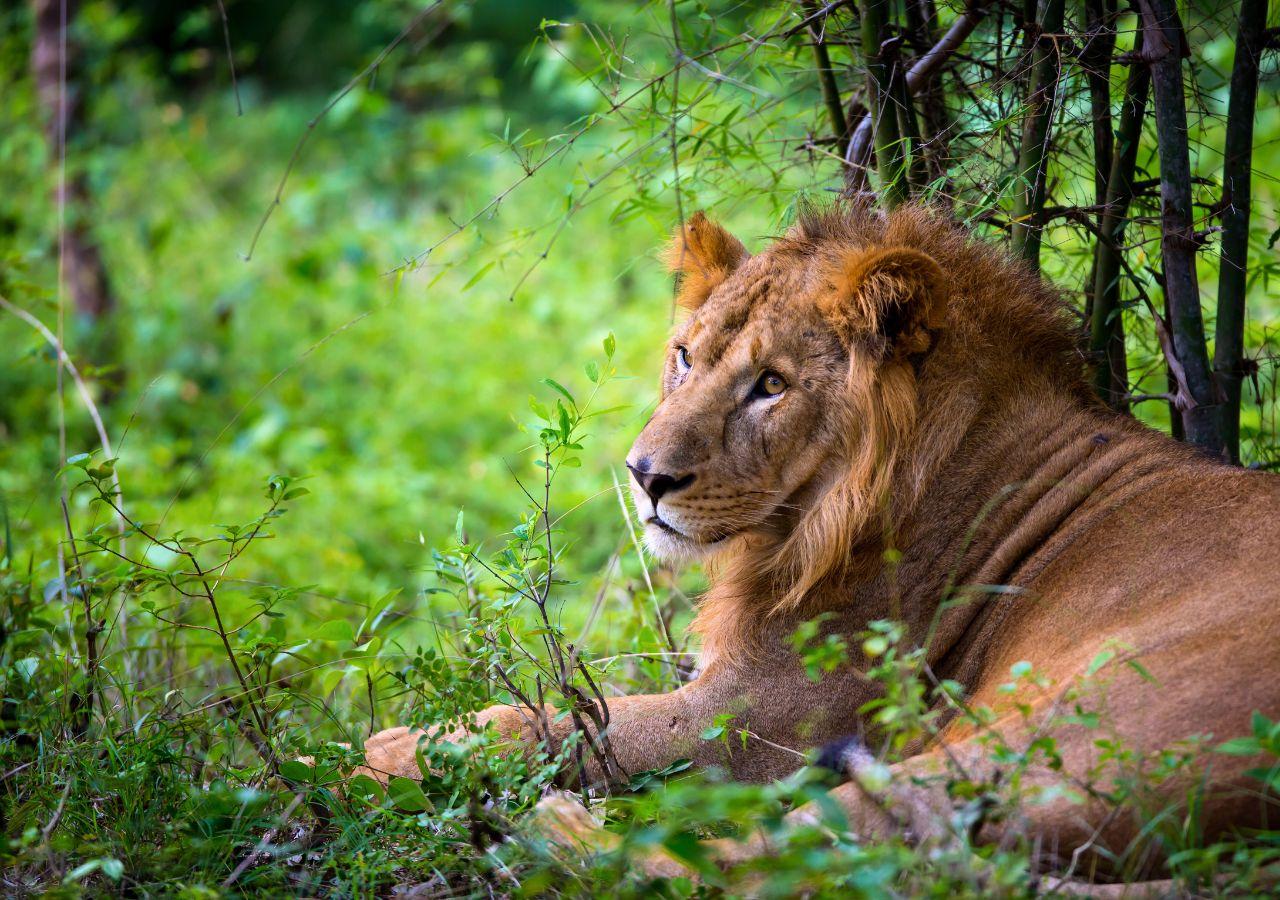
Asiatic Lion | India | Endangered
Why is it rare
Once found from Greece to Bengal, the Asiatic lion was hunted to near extinction by the early twentieth century, leaving a single population confined to Gujarat. Numbers have recovered steadily under strict protection, but Gir remains the only place in the world where you can see a lion outside Africa.
Where to find it
Gir National Park and its surrounding forest, in the state of Gujarat, is the lion's last wild stronghold. The dry, scrubby teak forest here also holds a healthy leopard population, so sightings of both cats on the same safari aren't unusual. It's a quieter, less-visited alternative to India's tiger reserves and works well as an add-on for travellers who've already ticked off Ranthambore or Bandhavgarh and want somewhere further off the well-trodden safari circuit.
Where to stay
Aramness Gir and The Postcard Gir Wildlife Sanctuary are two of the finest boutique lodges on the fringes of the park. Read more about combining Gir with India's other wildlife regions on our India safaris page.
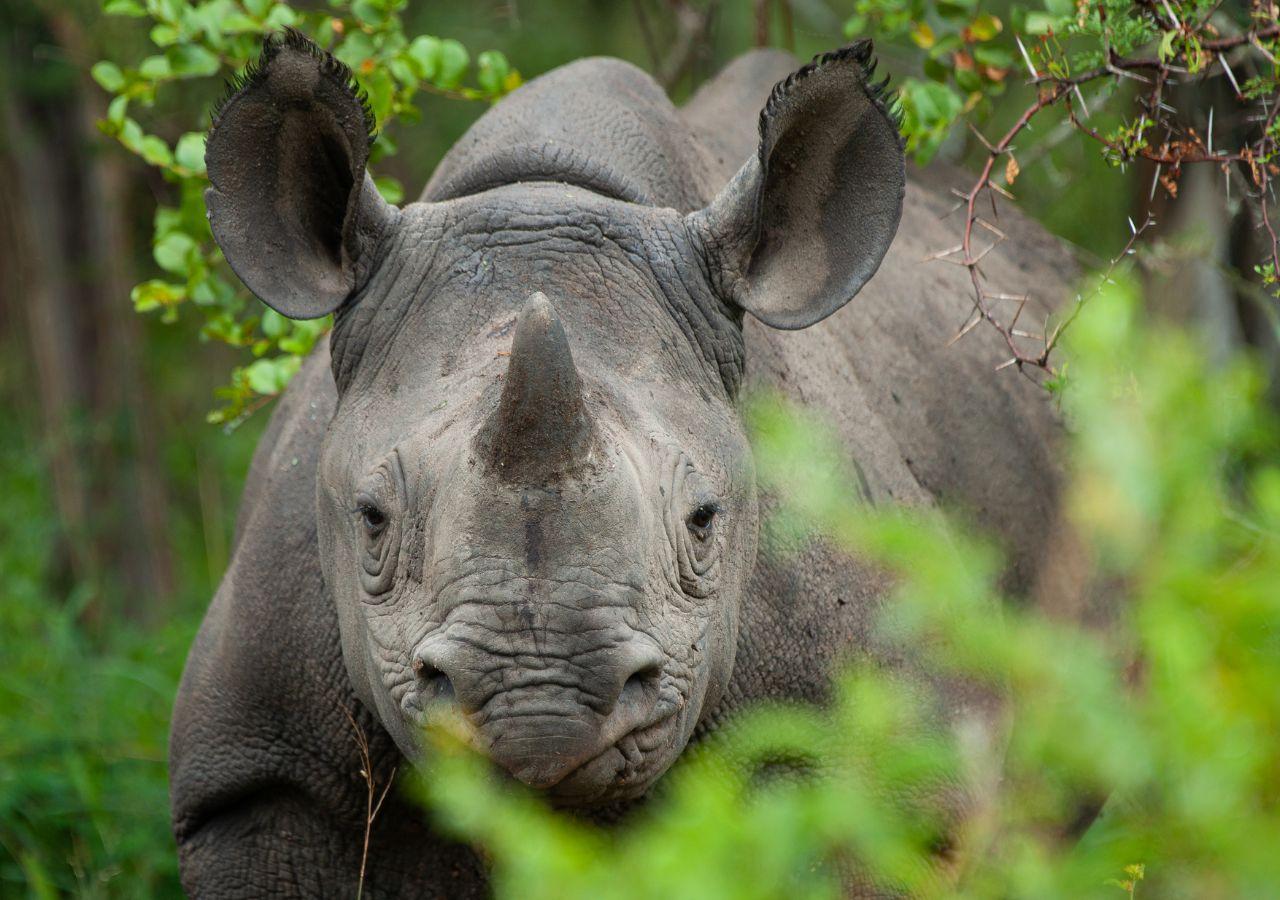
Greater One-Horned Rhino | India & Nepal | Vulnerable
Why is it rare?
Poaching for the illegal horn trade pushed the greater one-horned rhino to under 200 individuals by the 1960s. Decades of dedicated protection, including round-the-clock ranger patrols, have brought the global population back to around 4,000.
Where to find it?
The species' stronghold is actually India, not Nepal: Kaziranga National Park in Assam holds around 70% of the world's population, well over 2,000 rhino. Nepal's Chitwan National Park, in the Terai lowlands, holds the second-largest population at a few hundred. Our recommendation for most clients is Chitwan, since it combines easily with the rest of a Nepal itinerary and offers excellent sightings by open jeep or dugout canoe along the Rapti River, but Kaziranga is worth discussing with your Travel Expert if Assam fits your route or you want the larger of the two populations. Chitwan's tiger numbers have also grown significantly in recent years, so it's increasingly a two-species destination rather than a rhino-only one.
Suggested Itinerary
Nepal culture and wildlife holiday, which includes time at Barahi Jungle Lodge on the banks of the Rapti, right on Chitwan's doorstep.
Bengal Tiger | India & Nepal | Endangered

Why is it rare?
Poaching and habitat loss have reduced the Bengal tiger's range dramatically over the past century, and no reserve guarantees a sighting. Populations in both India and Nepal have been recovering steadily thanks to protected core zones, but a tiger still has to want to be seen.