+1 347-708-1755
Chances are, you've heard of the wildebeest migration thanks to wildlife documentaries or even the Lion King movie. However, not many people know much about this incredible wildlife event, such as where it takes place and what it involves. Many assume that the migration is all about dramatic river crossings but there's so much more to this great spectacle. Let's dive into an easy-to-read explanation of the greatest show on earth.

What is the wildebeest migration?
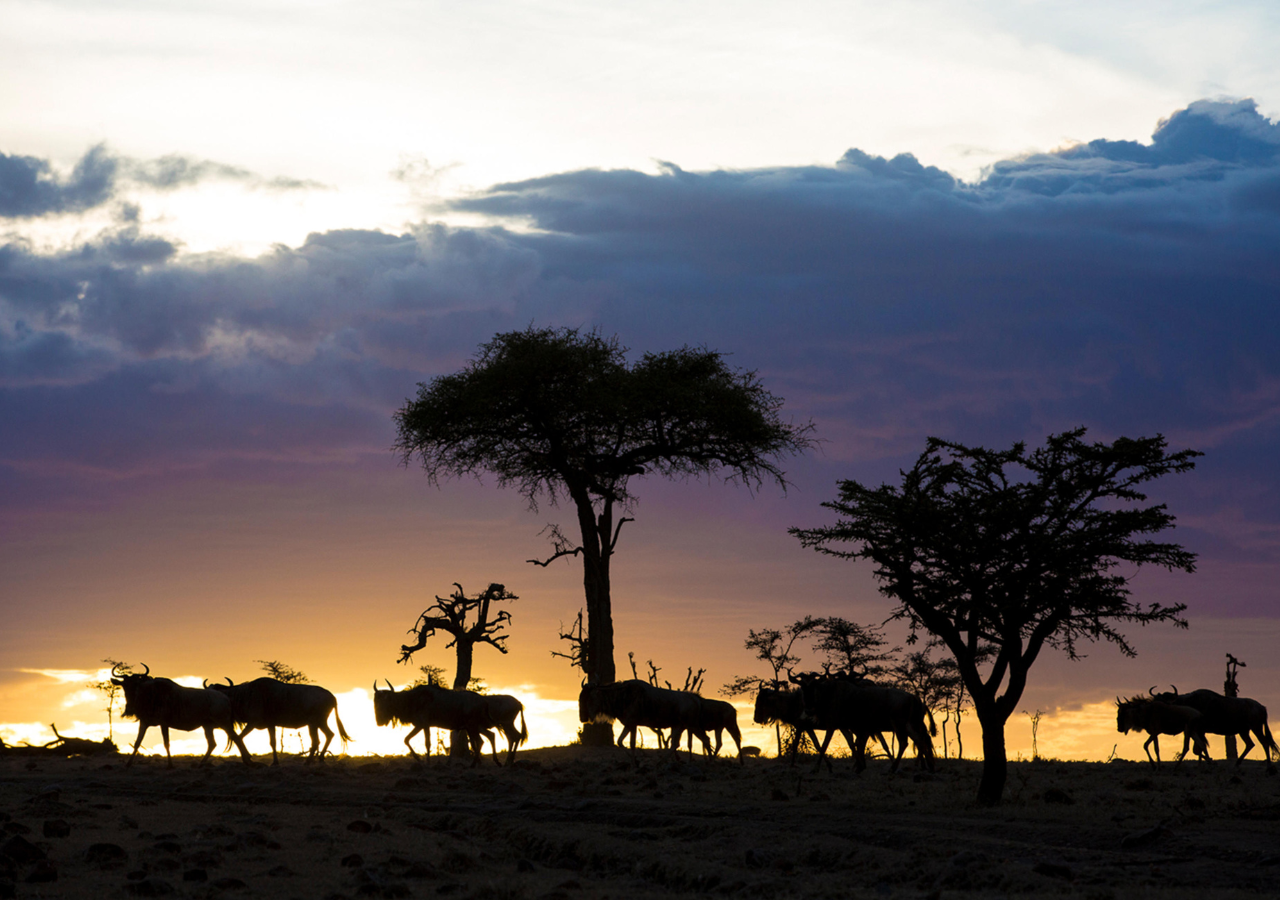
The wildebeest migration is an annual phenomenon where millions of wildebeest, zebras, and gazelles migrate across the plains of East Africa for water and fresh grazing. The migration begins in Tanzania in December and continues through Kenya in July and August, where the herds spend the rest of the year. The migration also serves an important ecological function in the Serengeti ecosystem by replenishing the grasslands and sustaining predator populations.
Where does the migration take place?
The wildebeest migration occurs over a wide area across Kenya's Maasai Mara and Tanzania's Serengeti National Park. These parks are one continuous ecosystem divided by an invisible man-made border.
Is it only Wildebeest which migrate?
No, together with the approximately 2 million wildebeest are thousands of zebras and gazelles forming one super herd. Zebras are often found alongside wildebeest as they have a symbiotic relationship. Zebras feed on the longer, tougher grass stems, which helps prepare it for the wildebeest. Wildebeests have a broader muzzle that is better suited for grazing on shorter grass.
Contrary to popular belief, lions and other carnivores don't migrate with the grazing animals. They instead hunt and feast on the grazing animals when their paths cross.

Why do the wildebeest migrate?
Simply put, the animals are following the rains to find fresh, lush grass. They take advantage of the strongly seasonal conditions in East Africa, spending the wet season on the plains in the southeast and the dry season in the woodlands of the northwest. The animals themselves play a role in shaping their environment to their needs by the sheer weight of their numbers.
The 800 km pilgrimage is an ongoing cycle of movement and dispersal. The migration isn't continually in forward motion. The wildebeest need to drink daily and their movement is primarily driven by the availability of water. Interestingly, the animals seem to have a sixth sense of following the storms!
This epic journey has no real beginning or end. The life of a wildebeest is an endless pilgrimage, as they constantly search for food and water. However, this journey comes with its perils. Each year over 250,000 wildebeest die as a result of injury, exhaustion, or predation.

The River Crossings
The famous spectacle of the crossing at the Grumeti and Mara Rivers has been well documented by filmmakers and photographers. Forced on by the power of the herd, the wildebeest have no choice but to take a suicidal plunge into the crocodile-infested waters often drowning in their thousands.

How can I witness the Migration?
There is no real right or wrong time to visit East Africa to see the migration as each season offers its own highlights. It is, however, important to be in the right area at the right time of year. For a full breakdown of when to witness the migration, click here.
January – Early March (Serengeti)
January through early March is an exciting time to witness the wildebeest migration in the Serengeti. This is the season when the wildebeest calves are born over a period of 3 to 5 weeks, making it one of the most popular times to visit the Serengeti. As there is an abundance of food in the form of vulnerable young wildebeest, sightings of lions, hyenas, and other predators are particularly good during this time.
Fortunately, because so many calves are born in such a short period, the predators do not have enough time to eat them all. During these months it is best to choose a camp or lodge in the southern plains of the Serengeti or Ngorongoro Conversation Area.

April / May (Serengeti)
To witness the wildebeest migration in April or May, you can follow the herds as they move from the depleted southern plains to the long grass plains and woodlands of the Serengeti’s western corridor, almost to Lake Victoria. This is the height of the rainy season. It may not be the most comfortable time to visit, but the low season rates can be very appealing. The lush green landscape and beautiful scenery are a sight to behold.
June / July (Serengeti / Maasai Mara)
As June arrives, the wildebeest have often exhausted the western corridor’s best pastures and the herds begin to move further north. At this point, the migration often splits and one column passes west to Lake Victoria, another passing north through the northern Lobo area of the Serengeti. By July, the herds gather along the Mara River, which is the last barrier before reaching the short, sweet grasses of the Maasai Mara.
To increase your chances of witnessing a river crossing, you should be in either the Serengeti's western corridor or its northern reaches. However, in some years, the Kenyan side may offer better views. Keep in mind that the timing and duration of the river crossing are unpredictable, and few wildebeest may actually cross the Mara River into Kenya in years with little rainfall.

August – October (Maasai Mara)
During this time, the migration is usually spread across the plains of Kenya's Maasai Mara. However, in some years, a significant portion of the herds remain in the Serengeti. In such cases, it is recommended to base yourself in the northern reaches of the park, known as the Lobo area, to have a better chance of seeing the migration during these months.
November / December (Serengeti)
In November, the herds are summoned south across the Tanzanian border by the short rains. By December, the wildebeest are typically scattered across the southern plains of the Serengeti once again.

Where to Stay to see the migration?
Wondering where to stay to witness the wildebeest migration? There is a huge selection of accommodation options in Kenya and Tanzania. For our top 10 places to stay to see the wildebeest migration, click here.

Mahlatini offers everything from luxury lodges and classic tented camps to simple mobile bush camps (designed to put you in the best place to catch all the action). The key is speaking to an expert who will have visited the camps and will know the locations well. At Mahlatini, most of our staff have seen the wildebeest migration in different countries and at different times of the year. They will ensure that you will be best placed to catch the herds on the move.